
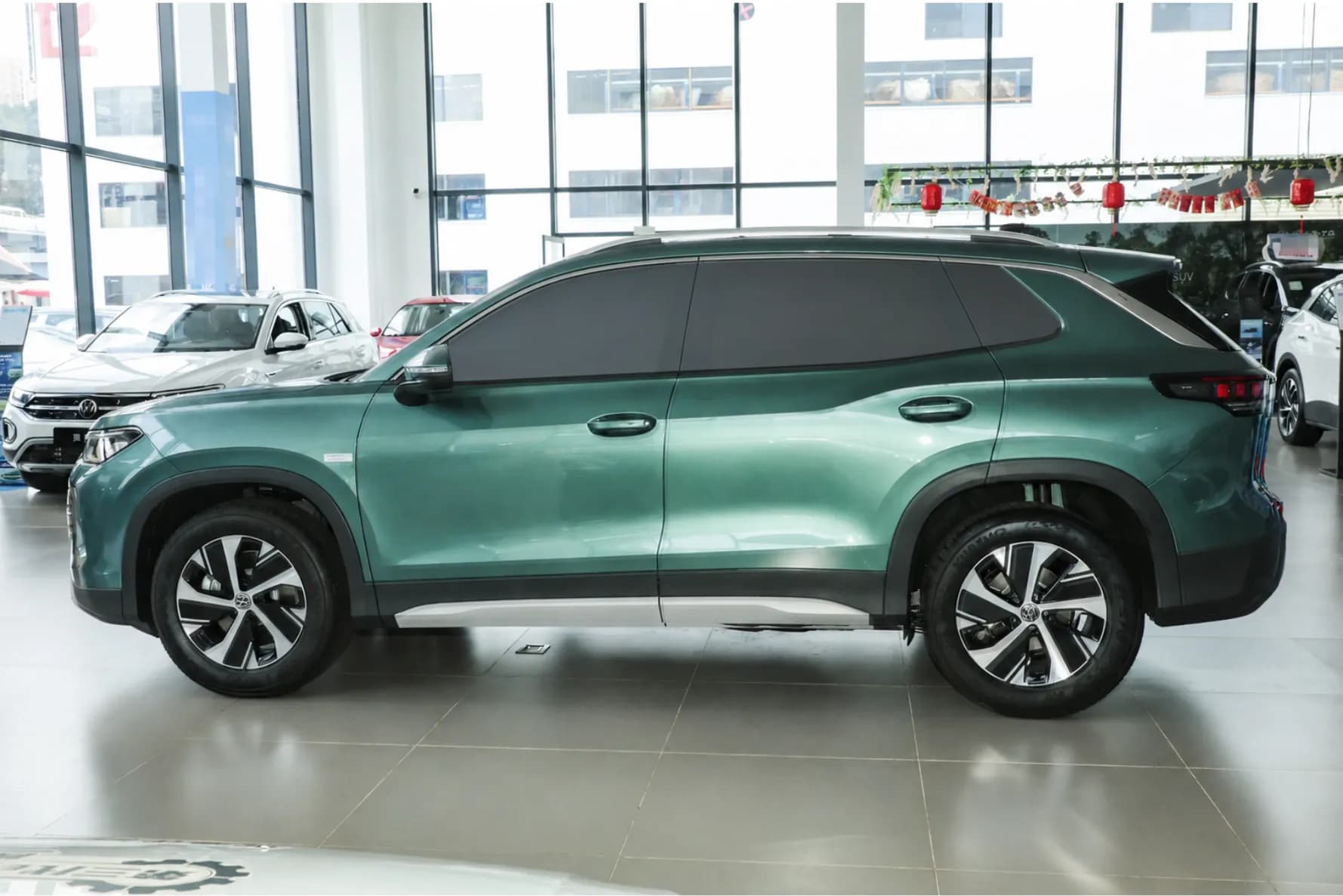
Electric Window Tint
Switchable tint technology for vehicles and specialty glass — PDLC privacy film with instant on/off control.
85.9% VLT
White model transparent
95% IR
Black model heat rejection
60V AC
Operating voltage
≤ 60 ms
Switch speed
Why Static Tint Falls Short
Traditional window tint is permanent — you choose a darkness level and live with it forever. At night, dark tint reduces visibility and safety for driving. In bright conditions, light tint may not provide enough glare or heat reduction. You cannot adapt a fixed-density film to changing conditions.
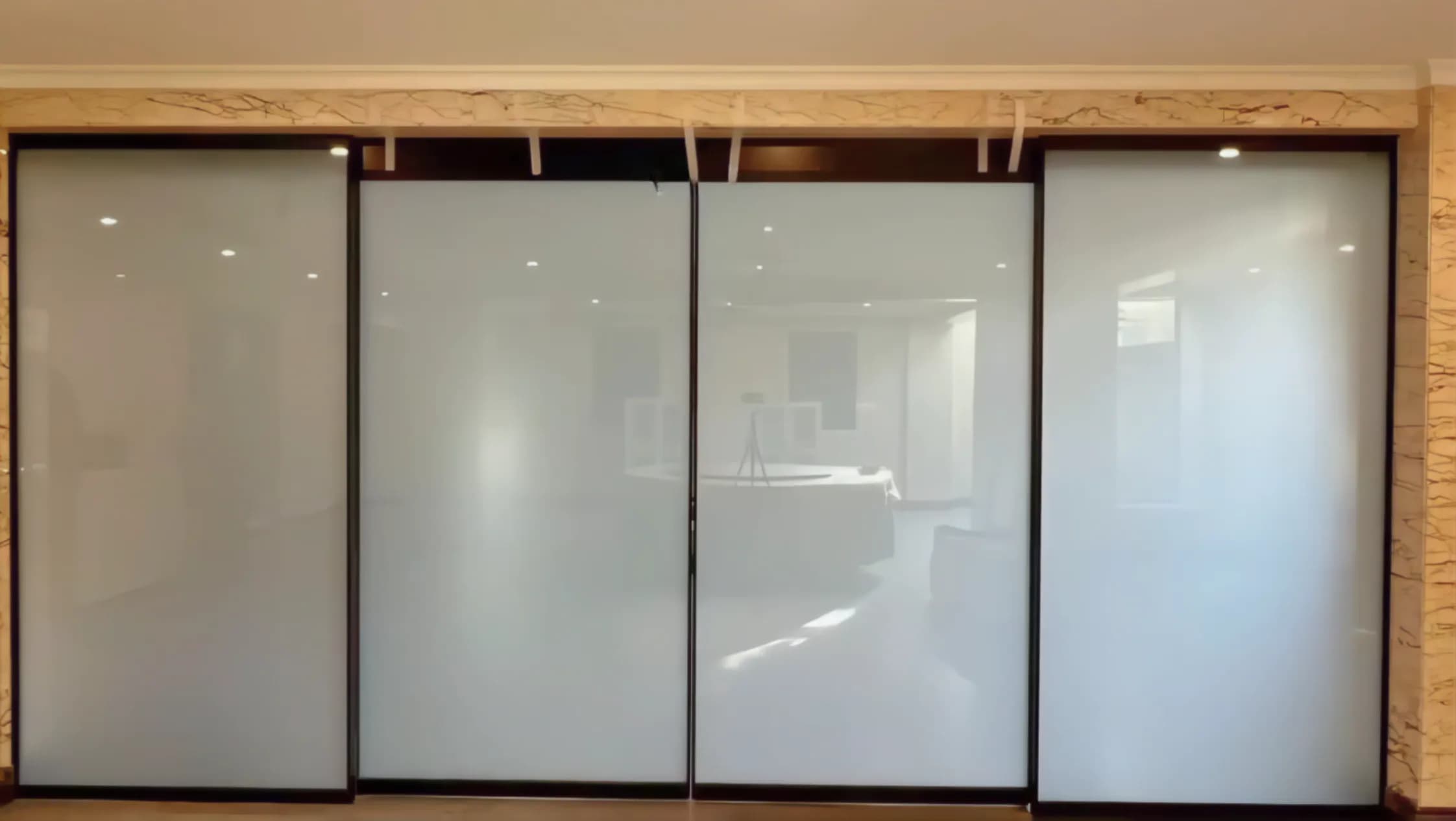
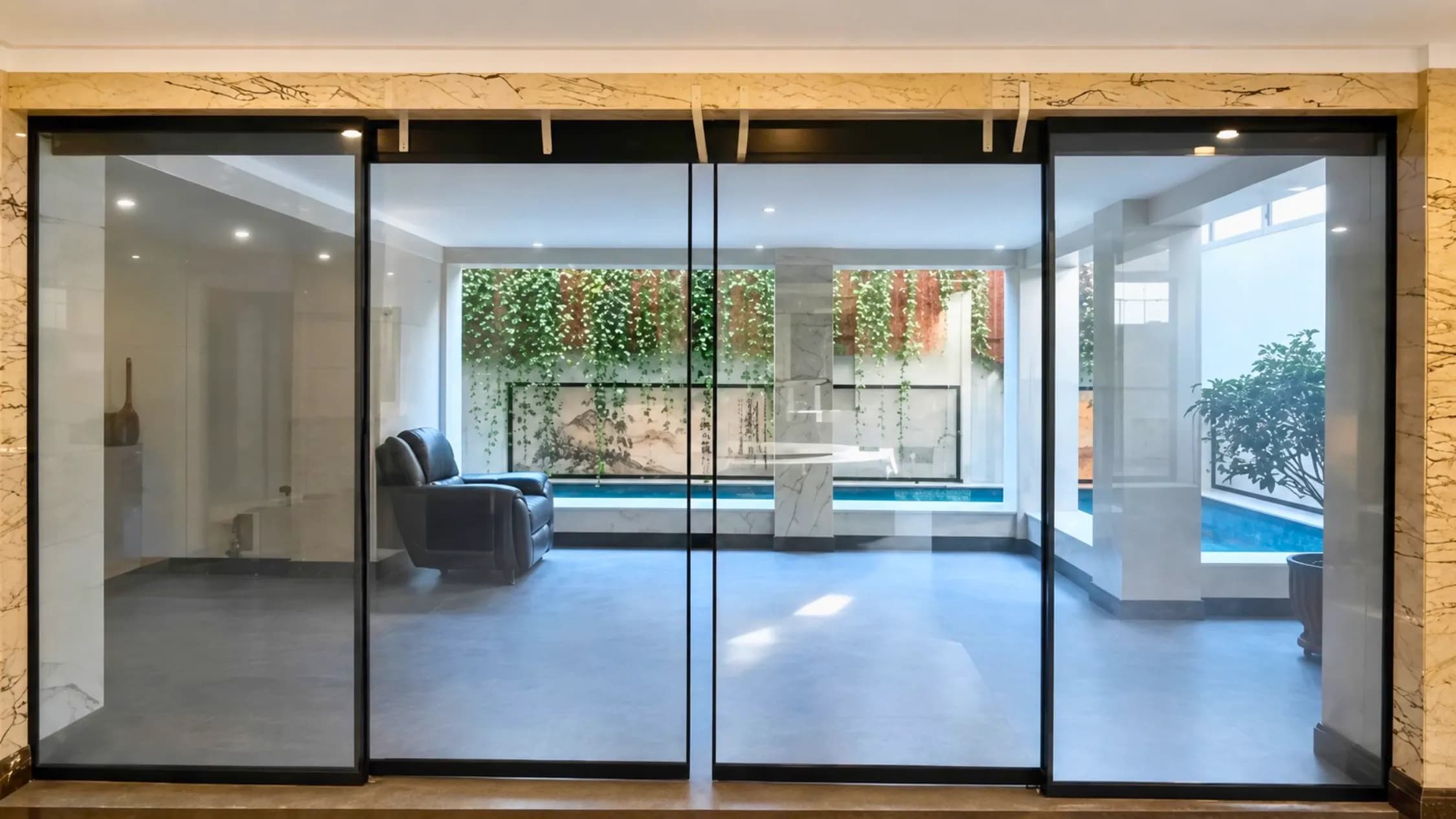
The mechanism: static tint is a fixed-density filter that cannot adapt to changing light conditions or privacy needs. Smart film applies an electrically controlled PDLC opacity layer that switches between frosted privacy and clear transparency in milliseconds. When 60V AC is applied, liquid crystal molecules align and light passes through. When power is removed, molecules scatter and the glass turns frosted. The transition is instantaneous — you get clear visibility when you need it and privacy on demand, adapting to your needs in real time.
Recommended Models for Vehicles
Models selected for vehicle use based on VLT compliance, IR rejection, and clarity.
Maximum clarity
EL-AUTO-White
Highest transparent-state VLT — meets most jurisdictions' side and rear window requirements
- 85.9% VLT (ON)
- 74% IR rejection (OFF)
- 97.5% UV rejection (OFF)
- 150° viewing angle
Balanced privacy and heat rejection
EL-AUTO-Grey
Stronger solar rejection with moderate privacy tint in transparent state
- 47.6% VLT (ON)
- 86% IR rejection (OFF)
- 99.99% UV rejection (OFF)
- 150° viewing angle
Maximum privacy and heat rejection
EL-AUTO-Black
Deepest tint and highest IR rejection for privacy-focused applications
- 23% VLT (ON)
- 95% IR rejection (OFF)
- 99.99% UV rejection (OFF)
- 150° viewing angle
Installation for Vehicle Glass
| Step | Detail |
|---|---|
| Wet application (water-aided) | Automotive PDLC film uses wet installation — a soapy water solution sprayed between film and glass allows repositioning and bubble evacuation. This is the standard automotive tinting method, not the dry-install technique used for architectural film. Clean glass thoroughly with IPA and lint-free cloth before wetting. |
| Edge clearance | Size film 2–3 mm shorter than visible glass edge to avoid edge stress and trim contact. The film thickness is 0.1 mm — thinner than typical PPF, requiring careful handling during positioning. |
| Busbar routing | Busbar must avoid metal trim contact. Route along the top or side edge with maximum clearance from metal frame elements. Automotive PDLC requires electrode-to-vehicle electrical system integration — the busbar connects to a DC-AC inverter that steps up the vehicle's 12V DC to 60V AC. |
| Edge seal | Neutral-cure silicone (DOWSIL 895/795 or Tosseal 381) seals edges against moisture and vibration. Vehicle environments subject the film to constant vibration and temperature cycling — proper sealing is critical to prevent busbar corrosion and delamination. |
| DC-AC inverter integration | Compact inverter converts vehicle 12V DC to 60V AC for PDLC operation. Mount under dashboard or in trunk. Wire to film busbar and vehicle ignition-switched 12V supply. The inverter must be sized to the total film area — multiple windows on one circuit share a single inverter when the total area is within capacity. |
Control Methods for Vehicles
Dashboard switch
Hardwired toggle on the dashboard — simple and always available.
RF remote
Key-fob style remote — switch tint without reaching for the dashboard.
Smartphone app
Bluetooth or Wi-Fi app — tap to switch, schedule, or automate.
Light sensor
Automatic — bright conditions → privacy, dark → clear for visibility.
Key Parameters
60V AC
Film voltage
3.7 W/m²
Power consumption
≤ 60 ms ON / ≤ 20 ms OFF
Switch speed
0.1 mm
Film thickness
-20°C to 70°C
Operating temp
Procurement Guide — Vehicle Tint
Understanding vehicle tint cost drivers ensures your order includes the correct model, inverter, and installation accessories for your specific vehicle.
- 01
Model and color selection
Three automotive models cover different priorities. EL-AUTO-White: 85.9% VLT (ON), 74% IR / 97.5% UV rejection (OFF) — best for jurisdictions requiring high VLT. EL-AUTO-Grey: 47.6% VLT (ON), 86% IR / 99.99% UV rejection (OFF) — balanced solar rejection. EL-AUTO-Black: 23% VLT (ON), 95% IR / 99.99% UV rejection (OFF) — maximum privacy and heat rejection.
- 02
Format — custom-cut sheets
Vehicle glass shapes are non-rectangular. Custom-cut sheets are produced to match each window template. Provide window dimensions or templates for accurate cutting. Available widths: Grey 1,200 mm, White 1,500 mm. Roll material also available (≤ 50 m per roll, 6-inch core).
- 03
Shape complexity surcharge
Flat side windows are straightforward. Curved glass (rear windshields, panoramic roofs) requires specialized wet-application technique and may need professional installation. Curved-surface surcharge reflects the additional labor and skill required.
- 04
DC-AC inverter cost
Each vehicle installation requires a dedicated 12V DC to 60V AC inverter. The inverter cost is separate from the film. One inverter can drive multiple windows on the same circuit — size by total film area.
- 05
Volume
Single-vehicle orders are standard. Fleet orders (5+ vehicles) qualify for tiered pricing on both film and inverters. Automotive OEM programs available for production-volume integration.
- 06
Shipping and lead time
Custom automotive orders require 10–15 business days for template matching, cutting, and quality inspection. Professional installation is recommended for curved surfaces and for the electrical integration (busbar-to-inverter wiring). Skilled DIY with proper tools is possible for flat side-window installations.
Frequently Asked Questions
Vehicle-specific questions about electric window tint. See the full FAQ for cross-product questions.
Regulations vary by jurisdiction. In most regions, smart film on side and rear windows is permitted when the transparent state meets minimum VLT requirements. Windshield application is typically restricted. Always verify local tint laws before ordering. Our EL-AUTO-White achieves 85.9% total VLT in transparent state, meeting most jurisdictions' requirements for side and rear windows. The EL-AUTO-Grey at 47.6% VLT may be restricted in some regions but offers significantly stronger solar rejection. The EL-AUTO-Black at 23% VLT is best suited for privacy-focused applications where local laws permit darker tint.
Vehicles provide 12V DC power, but PDLC film requires 60V AC to drive the liquid crystal alignment. A compact DC-AC inverter converts the vehicle's 12V DC supply to the correct 60V AC output. The inverter is typically mounted under the dashboard or in the trunk, with wiring routed to the film's busbar connections. Power draw in the transparent state is 3.7 W/m² — negligible impact on vehicle electrical systems. Correct inverter sizing is based on total installed film area.
Automotive PDLC film operates from -20°C to 70°C (-4°F to 158°F), covering most vehicle interior conditions across seasons. However, direct prolonged sun exposure on dark-colored vehicles in extreme climates may cause interior temperatures approaching the upper limit. Professional assessment is recommended for vehicles regularly exposed to sustained extreme heat. In the OFF state (frosted), the film provides additional solar rejection — EL-AUTO-Black blocks 95% IR and 99.99% UV when unpowered, keeping the cabin cooler while parked.
Yes. PDLC film defaults to opaque (frosted) state without power. When the vehicle is turned off and power is removed from the inverter, the film automatically switches to privacy mode. This provides a security benefit — vehicle contents are obscured when parked. Power draw in the opaque state is near zero, so battery drain is not a concern even for extended parking durations. The transition back to clear occurs within ≤ 60 ms of restoring power via the ignition or a dedicated switch.
Ready for Switchable Vehicle Tint?
Get a vehicle-specific specification with inverter sizing and installation guide.
Model recommendation, custom-cut templates, inverter specification, wiring diagram, and step-by-step installation documentation — all included with every vehicle order.