Smart film applications across glass surfaces
Switchable Glass Technology

Smart-Folie: Der vollständige Leitfaden

Alles, was Sie über schaltbare Smart-Folie wissen müssen — wie die PDLC-Technologie funktioniert, optische Leistungsvergleiche, Installationsgrundlagen, Kostenfaktoren und die besten Anwendungen für Häuser, Büros, Gesundheitswesen und Automobil.

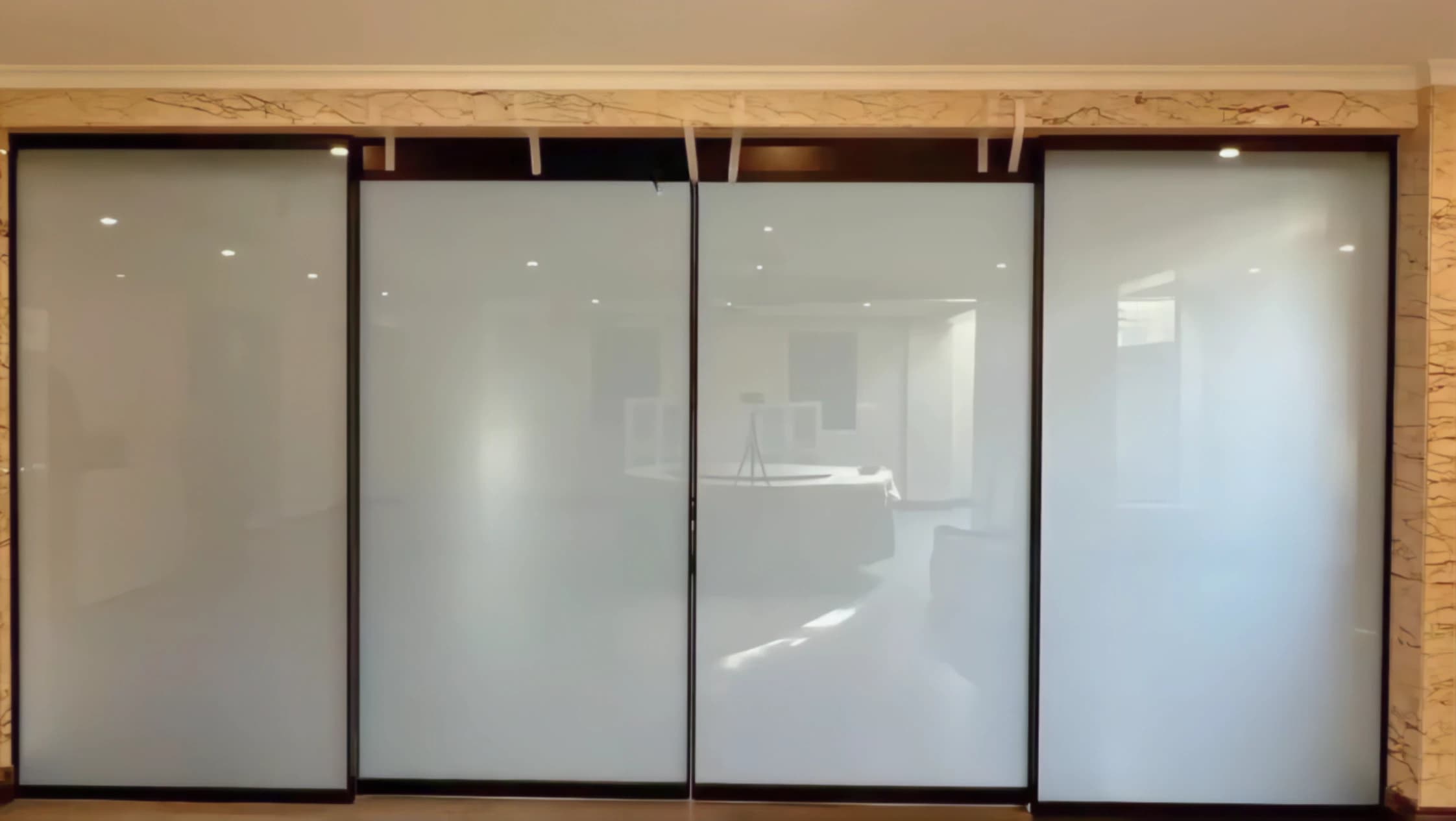
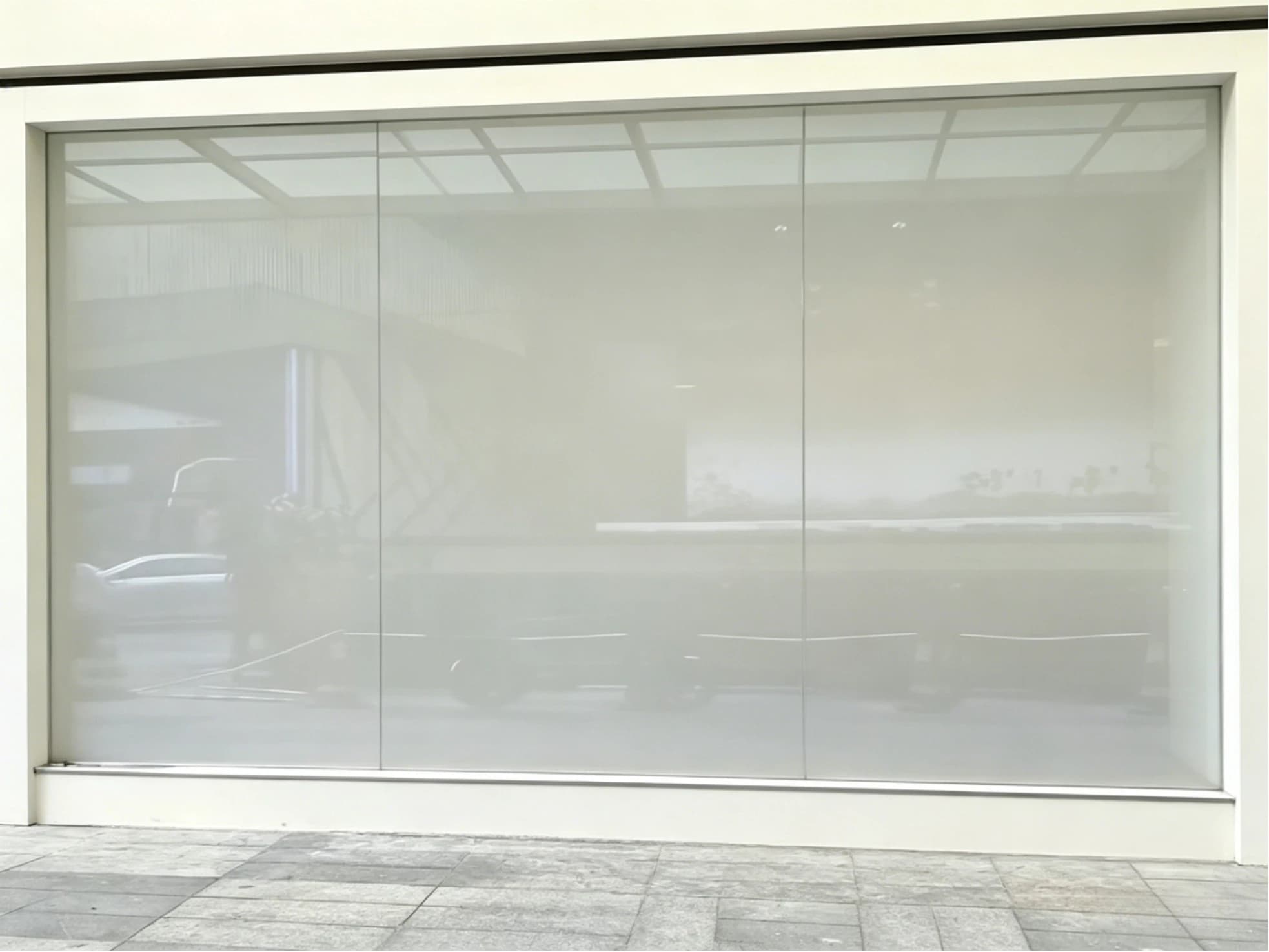
Smart film switching demonstration on glass

Why Traditional Glass Solutions Fall Short

Conventional privacy solutions trade one problem for another. Blinds and curtains collect dust, block daylight entirely, and wear out through mechanical cycling. Frosted glass is irreversible — the space permanently loses its view and natural light. Decorative window film is static with no switching capability.

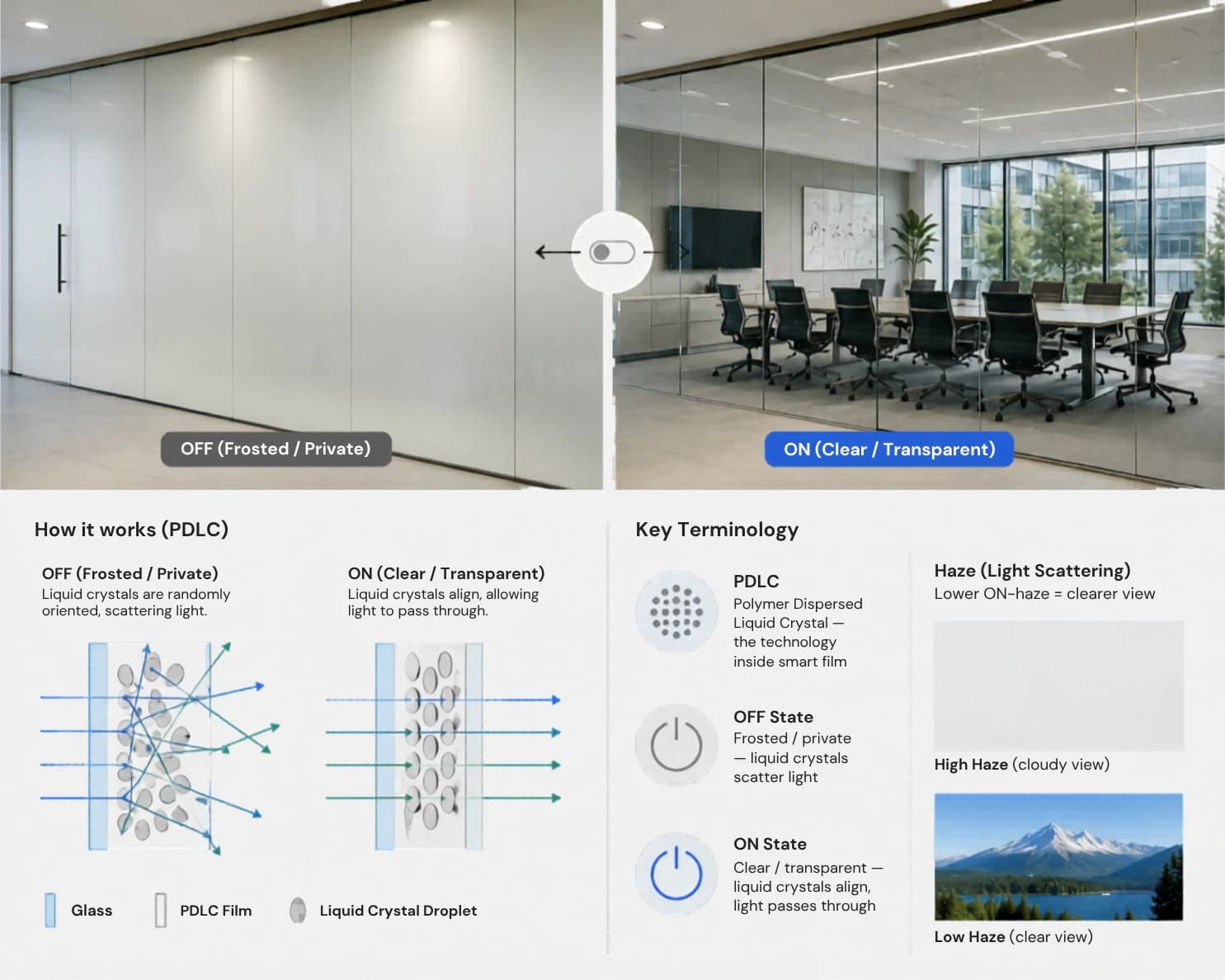
The underlying mechanism is always mechanical: every moving privacy surface introduces friction, dust accumulation, and a fixed trade-off between daylight and privacy. Smart film resolves this at the material level through liquid crystal molecular orientation control — no moving parts, no dust path, no mechanical wear. Daylight is preserved in the transparent state; privacy arrives in the opaque state; the transition completes in ≤ 60 milliseconds for PDLC and continuously for SPD.

PDLC smart film layered cross-section showing LC droplets and PET/ITO layers

How Smart Film Works

PDLC (Polymer Dispersed Liquid Crystal) film sandwiches microscopic liquid crystal droplets in a polymer matrix between two PET/ITO conductive layers. In the OFF state, LC droplets orient randomly, scattering light to produce the frosted privacy appearance. When 48/65V AC is applied, the LC molecules align along the electric field, matching the polymer refractive index — light passes through and the film turns transparent. The transition completes in ≤ 60 ms (≤ 20 ms for PRO models). AC voltage is essential to prevent polarization that would degrade the LC over time.

SPD (Suspended Particle Device) film uses a different mechanism: microscopic particles suspended in a fluid layer between conductive substrates. OFF: particles scatter randomly (deep blue, ≤ 2% VLT). ON: 90V AC aligns particles into columns (≥ 60% VLT). SPD transitions are slower (≤ 9 s) but offer continuous 30:1 dimming rather than binary switching. Both technologies use AC to prevent polarization damage to the active layer.

PDLC vs SPD vs Electrochromic

All PDLC and SPD values are from ElevatoX product technical documentation. Electrochromic shows publicly known general characteristics only.

AttributePDLC (ElevatoX)SPDElectrochromic
Switching speed≤ 60 ms / ≤ 20 ms PROOFF→ON ≤ 1 s / ON→OFF ≤ 9 sSeconds to minutes
Steady-state power3.7 W/m²3 W/m² transparent / 0 W opaqueLow at steady state
Dimming rangeBinary clear ↔ frosted30:1 continuous dimmingContinuous gradient
InstallationSelf-adhesive or laminatedLaminated or adhesive — contact usFactory-laminated only, complex integration

All PDLC and SPD values are sourced from ElevatoX product technical documentation. Electrochromic characteristics are publicly known general behavior only.

Application Scenarios

Each scenario lists the parameters that drive model selection and installation planning.

Office & Meeting Rooms

Office & Meeting Rooms

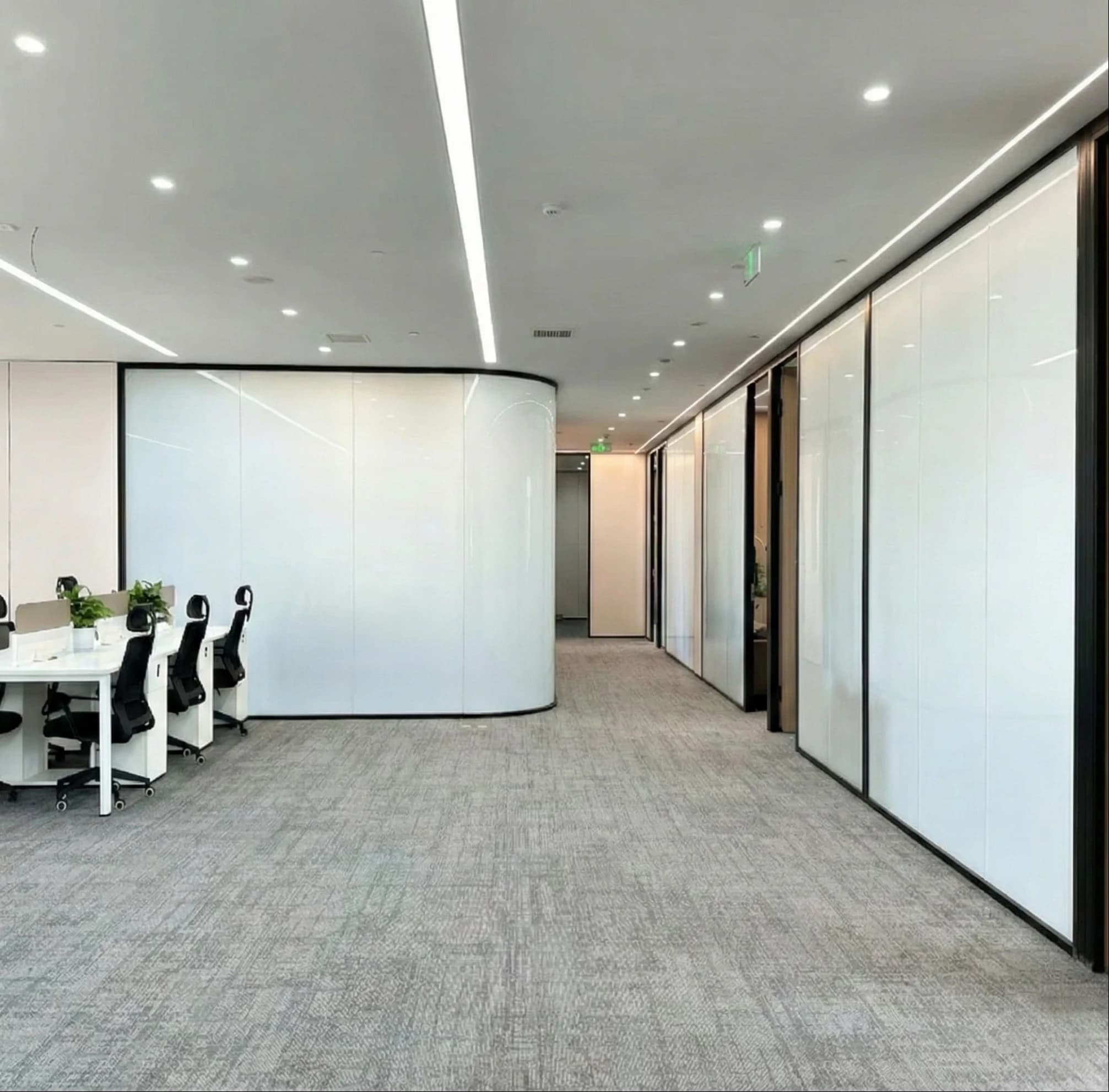
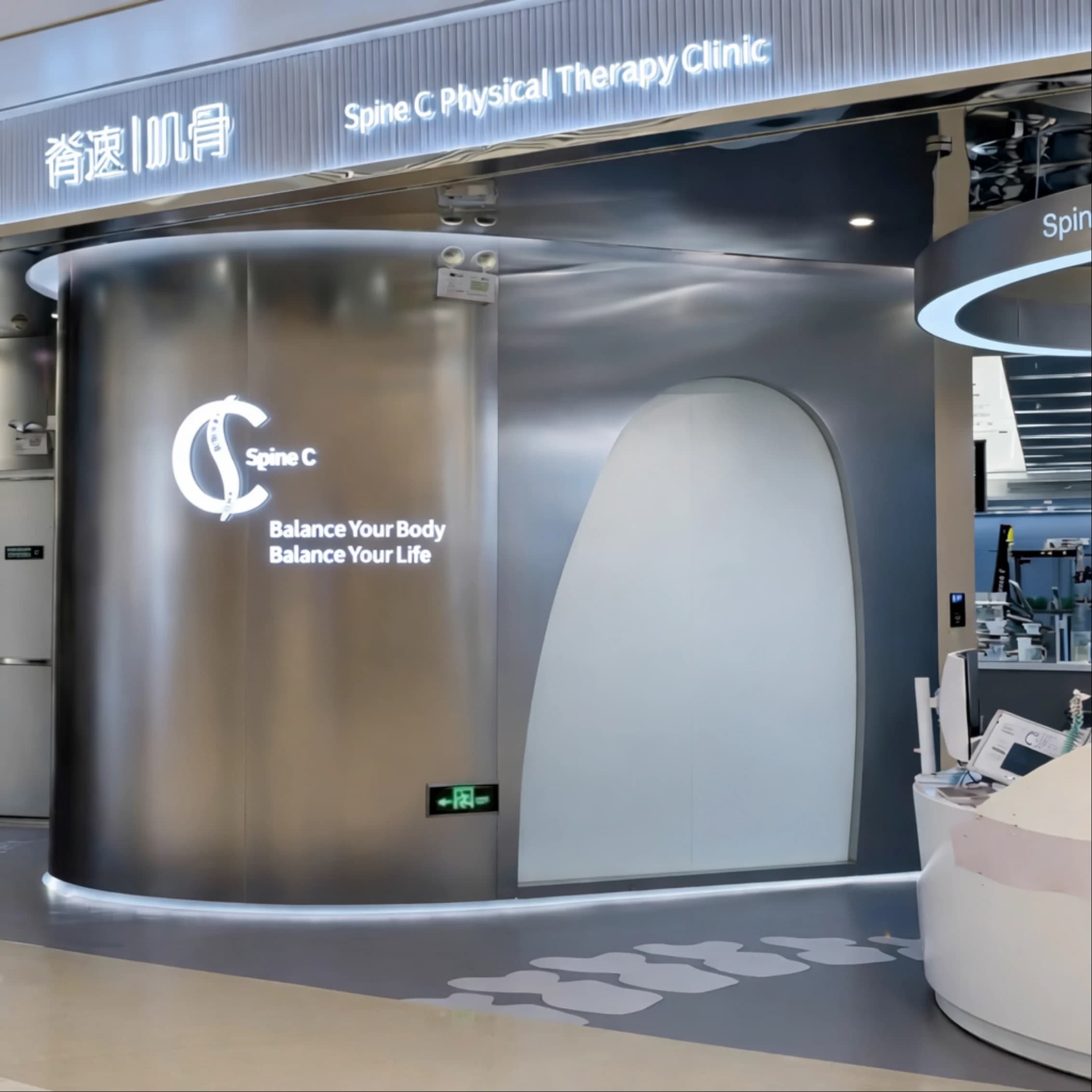
Conference rooms need privacy on demand without blocking daylight or the open-plan feel. PDLC partitions switch opaque in ≤ 60 ms for confidential discussions and clear again instantly. Scheduled Wi-Fi automates the daily open/closed cycle for partitions and storefronts.

  • Glass 1.0–1.8 m wide
  • Panel + Wi-Fi
  • EL-L2 / EL-X1
  • ≤ 60 ms switch
Healthcare & Clinics

Healthcare & Clinics

Treatment rooms and consultation areas need instant privacy that complies with hygiene standards. Self-adhesive film applies to existing glass partitions with no demolition. Neutral-cure silicone edge seal protects against humidity and cleaning agents. Switching 20–50 times daily is routine.

  • Glass 0.8–1.5 m wide
  • Panel + Sensor
  • EL-X1 / EL-X2-A
  • 3.7 W/m²
Hospitality & Hotels

Hospitality & Hotels

Hotel suites and front-of-house partitions need premium instant privacy. PDLC film integrates with smart-home bridges for guest-controlled ambiance. UV rejection 93.8–96% protects interior finishes and artwork. PRO models deliver 165° viewing angle for lobby glazing.

  • Glass 1.2–1.8 m wide
  • Smart-home bridge
  • EL-L2-PRO / EL-X2-PRO
  • > 100k hrs lifespan
Retail & Storefronts

Retail & Storefronts

After-hours privacy and projection-ready display surface in one product. Switching to opaque blocks visibility while allowing projected campaigns onto the glass. Wi-Fi scheduling automates the daily open/closed cycle. EL-X2-PRO delivers 97% total VLT for maximum daytime transparency.

  • Glass up to 1.82 m wide
  • Scheduled Wi-Fi
  • EL-X2-PRO
  • 97% total VLT
Residential

Residential

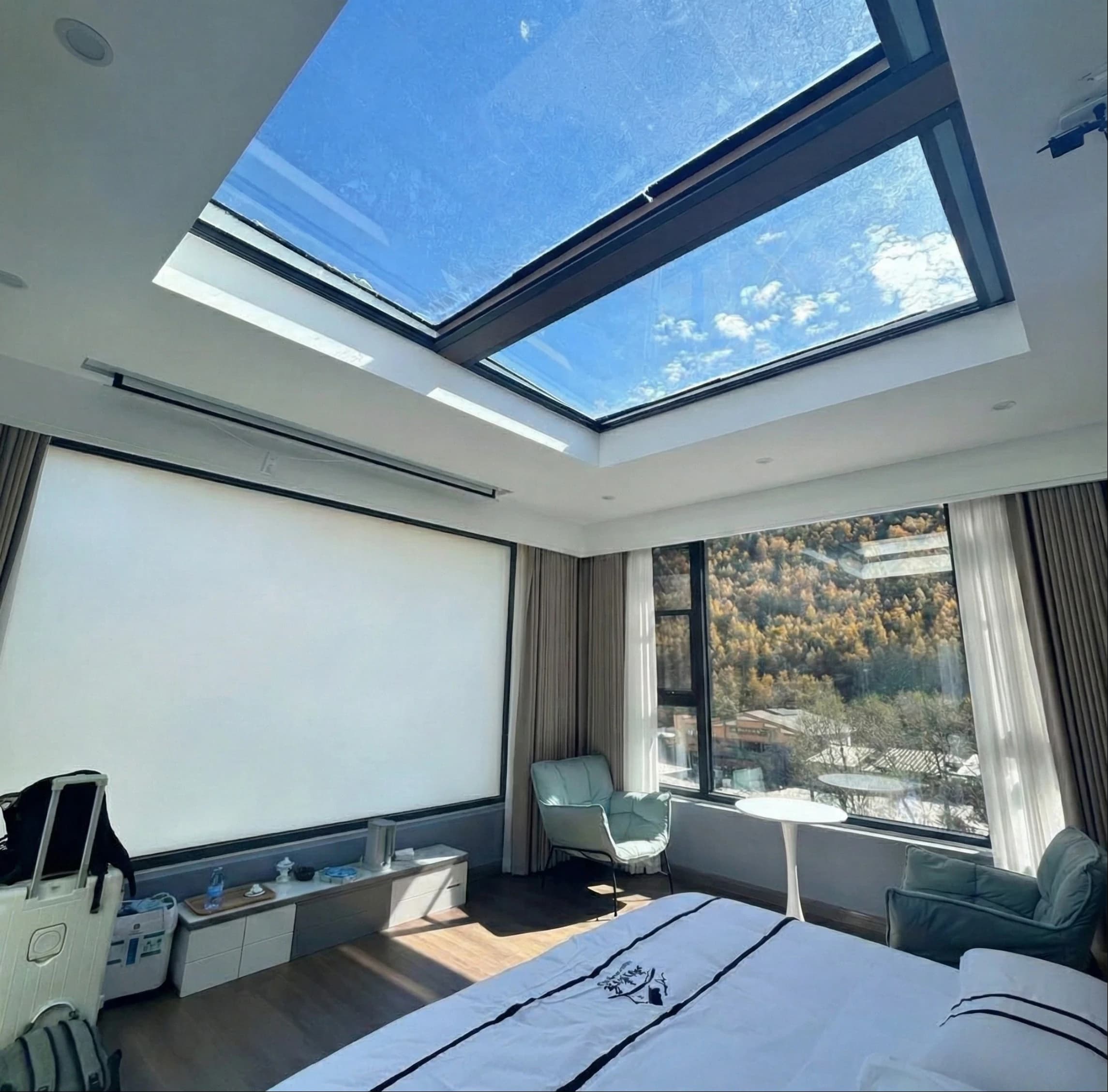
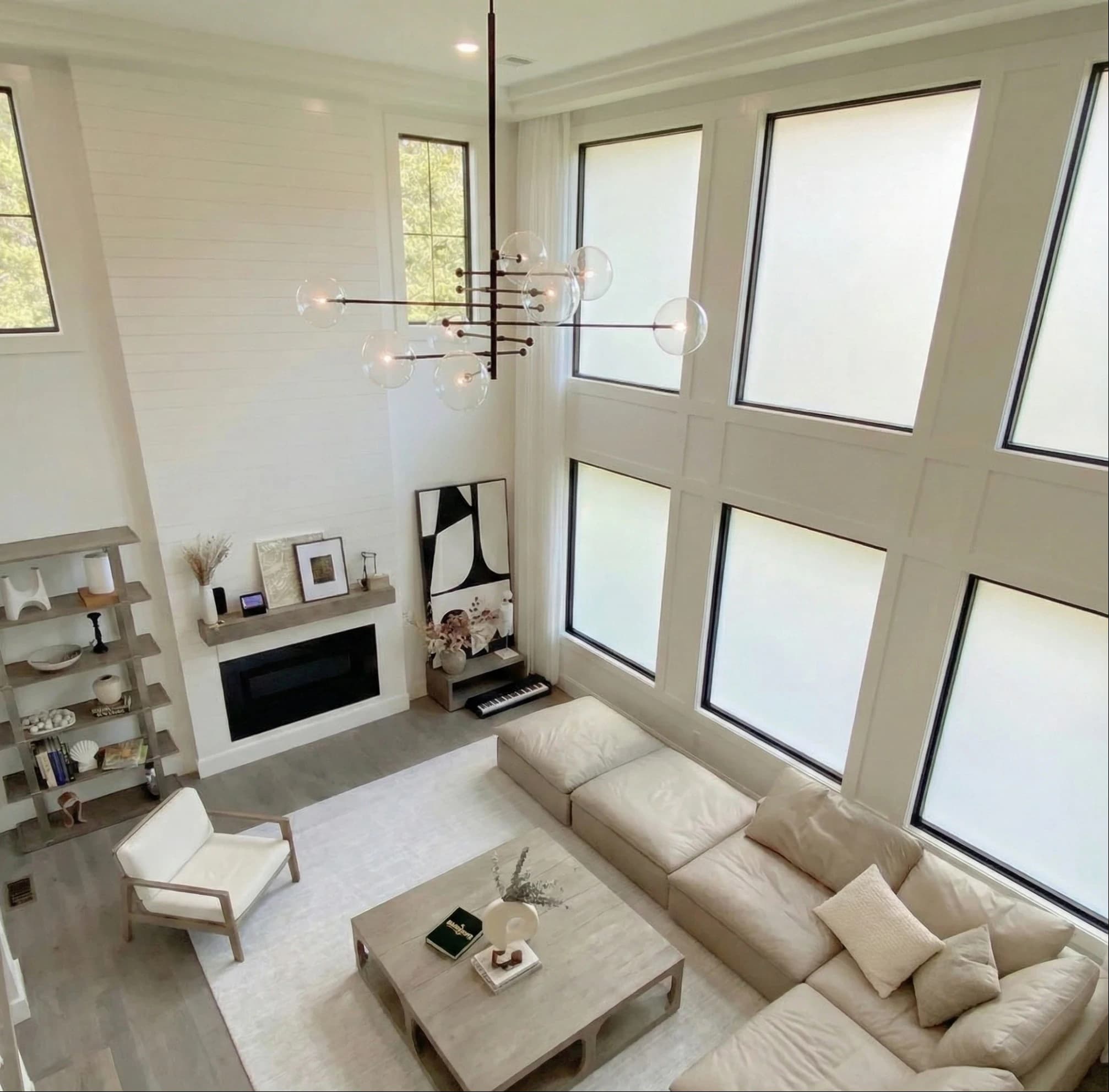
Bathrooms, bedroom partitions, and home offices need humidity-tolerant privacy that still admits daylight. Self-adhesive film applies directly to existing glass, sized 2–3 mm shorter than the visible pane. HomeKit, Google Home, and Alexa integration for hands-free control.

  • Glass 0.6–1.5 m wide
  • Sensor / Remote
  • EL-L2 / EL-L2-PRO
  • 48/65V AC

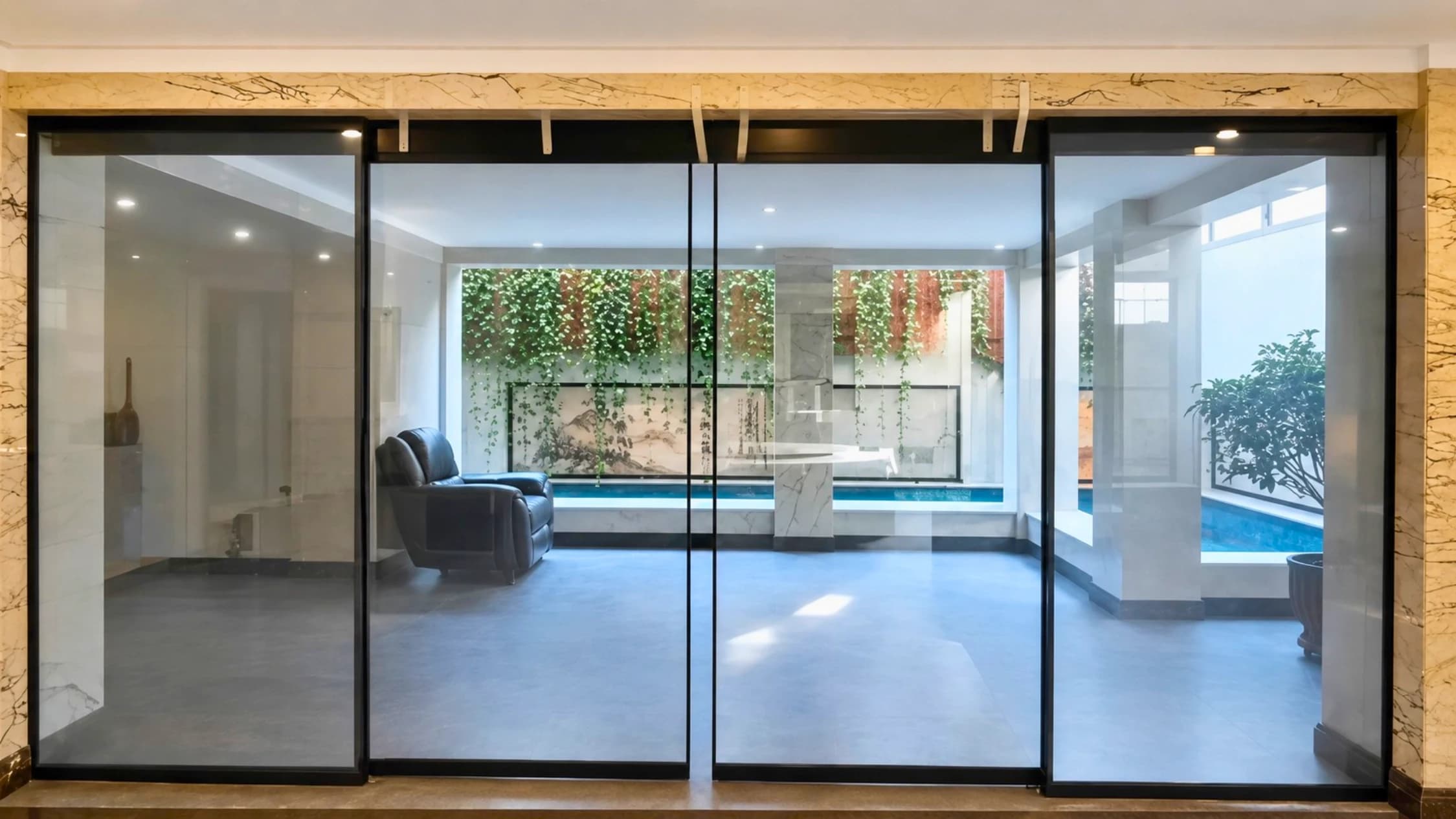
From homes to hospitals — smart film adapts to any glass surface

ElevatoX factory floor with automated winding lines

Certification & Factory Capability

Bound to the smart film category — every batch is tested before release, and the factory that winds the matching transformers is the same one that certifies the film.

20-year heritage

Two decades of PDLC and SPD manufacturing with continuous process improvement and material sourcing optimization.

20 automated winding lines

Daily output ≥ 5,000 transformers. ISO 9001, CE, and CQC certified production environment.

GB18910.5-2008

Lifespan test standard applied to all PDLC models, confirming the > 100,000 hour rating.

ISO 9001 · CE · CQC

Quality management system, European conformity, and China quality certification across the full product range.

Plan Your Wiring Before You Order

The wiring simulator helps you decide how many transformer channels your project needs and which control topology is most cost-effective — before final engineering review.

Smart Film FAQ

These questions cover the full smart film category. The aggregate FAQ at /faq links back here for cross-product navigation.

PDLC (Polymer Dispersed Liquid Crystal) switches between clear and frosted in ≤ 60 ms (≤ 20 ms for PRO models) — a binary opaque/transparent transition at 3.7 W/m². SPD (Suspended Particle Device) offers continuous dimming from ≥ 60% VLT to ≤ 2% VLT over ≤ 9 seconds, operating at 90V AC and drawing 3 W/m² when transparent, 0 W when opaque. PDLC is self-adhesive and retrofit-friendly; SPD is typically laminated. Choose PDLC for instant binary privacy; choose SPD for gradual tint control on facades or skylights.

Yes. ElevatoX self-adhesive PDLC film uses a dry-install adhesive backing applied directly to existing glass — no demolition, no water during installation. SPD film is typically laminated and requires autoclave processing. For detailed installation steps and edge-sealing rules, see the PDLC film product page.

PDLC film operates on 48/65V AC at 3.7 W/m² in the ON state. SPD film operates on 90V AC (70–110V adjustable) at 3 W/m² transparent / 0 W opaque. Both must be driven through a dedicated transformer — never wired directly to mains. The alternating current prevents polarization of the active layer and preserves film performance over the > 100,000 hour lifespan.

Yes. ElevatoX controllers support wall switches, remote controls, Wi-Fi panels, door-magnetic sensors, motion sensors, rotary dimmers, and smart-home bridges including HomeKit, Google Home, and Alexa. The 48/65V AC driver (PDLC) or 90V AC driver (SPD) pairs with these controllers without additional relays in most cases. For multi-channel installations, the wiring simulator helps plan transformer sizing and channel routing before final engineering review.

SPD film operates from -20°C to 90°C, covering most exterior applications. However, exterior-rated deployments require project-specific certification and lamination specification. Contact us for spec confirmation on unprotected outdoor use. PDLC film is rated to 70°C and is suited for interior and protected exterior installations such as covered vestibules.

Pricing is driven by technology choice (PDLC vs SPD), model tier, format (ready-to-install sheet vs semi-finished roll), film width, control add-ons, volume tiering, and shipping terms. The smart film cost page breaks down each factor; the PDLC product page covers PDLC-specific procurement in detail. FOB and EXW are both supported, and OEM/ODM options are available on bulk orders.

Modern architecture with smart film

Bereit loszulegen?

Bringen Sie sofortige Privatsphäre, Blendschutz und Energieeinsparungen in Ihr nächstes Projekt.

Erhalten Sie eine maßgeschneiderte Spezifikation, Modell-Empfehlung, Verkabelungsanleitung und einen Rollout-Plan für Ihre Fenster oder Glastrennwände. Wir liefern produktionsgetestete Smart-Folie mit klarer Installationsdokumentation.

Smart Film: Der komplette Leitfaden | elevatoX