
يختلف فيلم PDLC عن الزجاج المُعتم في كيفية تشتيتهما للضوء، وتأثيرهما على الخصوصية، وتمريرهما للضوء الطبيعي. قارن بين السلوك البصري، ونفاذية الضوء المرئي (VLT)، والتعتيم (Haze)، ومتطلبات التركيب.
ضع لوحًا من الزجاج المُعتم أمام كلب، فعادة ما يمكنك تمييز أنه كلب.
ضع فيلم PDLC في حالته OFF أمام الكلب نفسه. قد ترى حركة وسطوعًا وظلًا، لكن يصبح من الأصعب بكثير تحديد ما هو الجسم.
هذه المواد ليست متكافئة بصريًّا. فالفرق ليس مجرد أن أحدهما يبدو "أكثر تعتيماً"؛ وإنما أن كليهما يبعثر الضوء بآليات فيزيائية مختلفة.
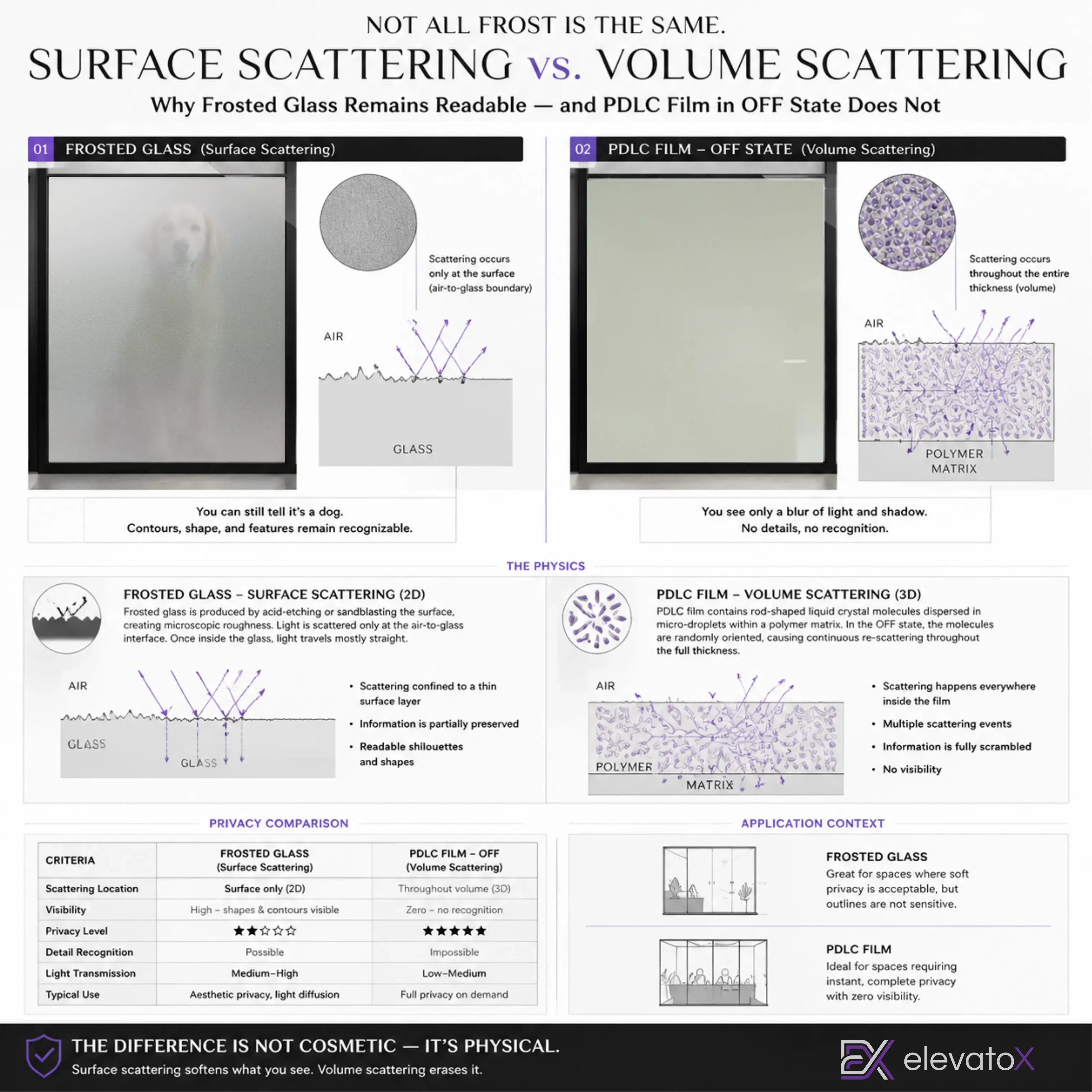
الزجاج المعتاد المعالج بالحفر الكيميائي أو السفع الرملي يخلق لا انتظامات مجهرية على سطح الزجاج. وعندما يصل الضوء إلى هذه الحدود الخشنة، يُعاد توجيهه في اتجاهات متعددة.
يبقى الزجاج أسفل السطح المعالج ركيزة شفافة ومتجانسة نسبيًّا. وبعد حدث التشتيت الأولي، يستمر جزء كبير من الضوء في المرور عبر المادة.
لهذا غالبًا ما ينتج عن الزجاج المُعتم صورة ناعمة بدلاً من صورة مشوَّشة بالكامل:
تعتمد النتيجة الدقيقة على نمط التعتييم، وسُمك الزجاج، والإضاءة، ومسافة الرؤية، وتباين الجسم خلف الزجاج. يمكن للتعتييم السطحي الدقيق أن يوفر قدرًا كبيرًا من الخصوصية، لكنه لا ينبغي أن يُعامل تلقائيًّا كحاجز بصري تام.
يُعد فيلم PDLC نظامًا بصريًّا مركبًا، وليس مجرد سطح خشن مُطبَّق على الزجاج.
يحتوي الفيلم على قطرات من البلورات السائلة موزعة داخل مصفوفة بوليمرية. عند تطبيق الكهرباء، تصطف البلورات السائلة بشكل أكثر اتساقًا مع البنية البصرية للفيلم، مما يسمح للضوء بالمرور بشكل أكثر مباشرة. وعند فصل التيار، تصبح القطرات ذات اتجاهات عشوائية.
يواجه الضوء الذي يدخل الفيلم في حالته OFF اختلافات متكررة في معامل الانكسار خلال سُمك الفيلم. وبدلًا من أن يُعاد توجيهه بشكل أساسي عند سطح واحد، يُبعثر الضوء عبر حجم المادة بالكامل.
هذا يغيّر الصورة بطريقة مختلفة:
لذا يُوصَف فيلم PDLC بشكل أدق بأنه مُشتِّت خصوصية قابل للتحويل أكثر من كونه حاجز تعتيم كامل. فحالة OFF يمكن أن تزيل التفاصيل البصرية مع الاستمرار في تمرير الضوء المحيط.
| الخاصية البصرية | الزجاج المُعتم | فيلم PDLC، حالة OFF |
|---|---|---|
| السلوك البصري الأساسي | تشتيت سطحي في الغالب | تشتيت عبر حجم الفيلم |
| الصورة خلف المادة | مُنعمَة؛ قد تبقى الخطوط الخارجية مقروءة | أكثر انتشارًا؛ تصبح الهوية أصعب في التعرّف |
| حالة الخصوصية | دائمة | قابلة للتحويل كهربائيًّا |
| تمرير ضوء النهار | منتشر ودائم | منتشر عند فصل التيار |
| المظهر | غير لامع أو شبه شفاف بشكل دائم | شفاف عند توصيل التيار، ضبابي عند فصله |
| متطلبات الطاقة | لا يوجد | يتطلب نظامًا كهربائيًّا مخصصًا |
هذا التمييز مهم لأن الخصوصية لا تُقاس فقط بمقدار الضوء الذي يمر عبر المادة، بل أيضًا بما إذا كان هذا الضوء يحتفظ بما يكفي من المعلومات الاتجاهية لتمكن العين من إعادة تكوين الصورة.
لا. فيلم PDLC يبعثر الضوء المرئي بدلًا من امتصاصه بالكامل. قد تظل الأجسام الساطعة والحركة والظلال ظاهرة على شكل أشكال منتشرة. تتمثل فائدة الخصوصية الرئيسية في فقدان التفاصيل وإمكانية التعرّف البصري.
خطأ شائع هو التعامل مع التعتيم العالي ونفاذية الضوء المرئي المنخفضة على أنهما متكافئان.
هما ليسا كذلك.
يمكن لفيلم PDLC أن يمرر مقدارًا ملحوظًا من الضوء المرئي في حالة الخصوصية مع الاستمرار في جعل المشهد خلفه صعب التعرّف. هذا هو الأثر العملي للتشتيت الحجمي.
بالنسبة إلى EL-X2-PRO، تُظهر إرشادات المنتج المتاحة مؤشرات الأداء التالية:
لا يحدد المخطط المتاح قيمة تعتيم موحدة لحالة OFF لكل ظروف التركيب. يمكن أن يتأثر الناتج البصري الفعلي أيضًا بركيزة الزجاج، ولون الفيلم، وزاوية الرؤية، والإضاءة، وجودة التركيب.
وينطبق الحذر نفسه على الأداء الشمسي. فالتعتيم لا يثبت قيمة TSER معينة، ولا ينبغي استبدال رفض الأشعة تحت الحمراء بـ TSER. يجب التحقق من TSER لتجميع الزجاج والفيلم الكامل.
| البُعد | فيلم PDLC | الزجاج المُعتم | فيلم الخصوصية الثابت | الستائر أو الستائر القماشية |
|---|---|---|---|---|
| VLT | يعتمد على الحالة والمنتج؛ تحقّق من المواصفات الكاملة | يعتمد على تركيب الزجاج والمعالجة السطحية | يعتمد على درجة الفيلم وتركيبه | يعتمد على ما إذا كان الغطاء مفتوحًا أم مغلقًا |
| TSER | يتطلب اختبارًا على مستوى التجميع؛ التعتيم لا يحدد TSER | التعتييم وحده لا يحدد الرفض الشمسي | يعتمد على المنتج والزجاج | يمكن أن يقلل الكسب الشمسي عند الإغلاق، بحسب القماش وطريقة التركيب |
| سلوك الخصوصية | خصوصية منتشرة قابلة للتحويل مع حالة شفافة | انتشار دائم | انتشار دائم | حجب بصري قابل للضبط |
| الجمالية البصرية | مظهر زجاج شفاف عند توصيل التيار؛ تأثير شبه شفاف عند فصله | غير لامع أو مُحكم الملمس بشكل دائم | قد يُظهر الحواف أو الفواصل أو الفقاعات أو اختلافات اللاصق | يضيف قماشًا مرئيًّا ومكوّنات ميكانيكية |
| عبء الصيانة | سطح الفيلم سهل التنظيف، لكن المحوّلات والأسلاك والاتصالات تحتاج إلى عناية | لا توجد صيانة كهربائية | منخفضة إلى متوسطة؛ حالة الحواف واللاصق مهمة | القماش، والمسارات، والمحركات، والغبار تحتاج إلى صيانة |
| إمكانية العكس | قابلة للعكس كهربائيًّا | غير قابلة للعكس بدون استبدال الزجاج | يتطلب الإزالة والاستبدال | قابلة للضبط يدويًّا أو آليًّا |
| قيود التركيب | يتطلب زجاجًا متوافقًا، وقضبان توصيل (busbars)، وأسلاكًا، ومحوّل 48/65V AC | يتطلب إطارات مناسبة وتعاملًا إنشائيًّا ملائمًا | يتطلب إعدادًا دقيقًا للركيزة | يتطلب مساحة تثبيت وتنسيقًا لمكوّنات التركيب |
| أفضل استخدام | خصوصية قابلة للتحويل للفواصل والمكاتب والحمامات وقاعات الاجتماعات | خصوصية ثابتة دون اعتماد كهربائي | خصوصية دائمة بتعقيد أقل | تحكم قابل للضبط في التظليل أو التعتيم |
تكشف هذه المصفوفة عن جوهر المقايضة. فالزجاج المُعتم يغيّر خصائص الزجاج بشكل دائم. بينما يغيّر فيلم PDLC الحالة البصرية للزجاج عند الطلب، لكنه يضيف متطلبات كهربائية وتركيبية.
قد يبدأ الاختلاف البصري من البصريات، لكن نتيجة المشروع تعتمد على النظام الكامل.
يتطلب فيلم PDLC ما يلي:
لا ينبغي توصيل الفيلم مباشرة بتيار 110V أو 220V. يجب أن يقوم المحوّل بتحويل التيار الداخل إلى جهد التشغيل المحدد للفيلم.
إذا تم اختيار المحوّل بشكل غير صحيح، فقد يفشل الفيلم في التحويل بشكل مستقر. وإذا تضررت قضبان التوصيل أو الأسلاك، فقد يبقى جزء من الزجاج شفافًا أو ضبابيًّا. وإذا لم يُركَّب الفيلم مع ترك سماحية كافية لحركة المادة، فقد ينتج عن ذلك إجهاد عند الحواف أو مشكلات في المحاذاة أو عيوب مرئية.
سلسلة السبب والنتيجة ذات الصلة واضحة:
يساعد اختبار المتانة في تحديد الإمكانات على المدى الطويل، لكنه لا يلغي مخاطر التركيب. فالعمر التشغيلي المعلن لأكثر من 100,000 ساعة وأكثر من 200 مليون دورة تحويل لا يكون ذا معنى إلا عندما يبقى جهد التشغيل، والظروف البيئية، والتوصيلات، وطريقة التركيب ضمن المواصفات.
عادةً ما يعود فيلم PDLC إلى حالته الضبابية الموفّرة للخصوصية عند عدم تغذيته بالكهرباء. يمكن أن يدعم ذلك تصاميم الخصوصية كحالة افتراضية، لكنه قد يكون غير مناسب عندما يجب أن يبقى الزجاج شفافًا أثناء انقطاع التيار. ينبغي تحديد استراتيجية التحكم ومتطلبات الطاقة الاحتياطية قبل التركيب.
| متطلب المشروع | الخيار الأنسب | السبب |
|---|---|---|
| خصوصية دائمة بدون مكوّنات كهربائية | الزجاج المُعتم | ثابت وبسيط ومستقل كهربائيًّا |
| خصوصية يمكن أن تتغير فورًا | فيلم PDLC | يتحوّل بين حالات الانتشار والشفافية |
| معالجة لاحقة لزجاج موجود | فيلم PDLC أو فيلم خصوصية ثابت | يمكن أن يجنّب استبدال الزجاج بالكامل إذا كانت الركيزة متوافقة |
| تظليل قابل للضبط أو تعتيم كامل | الستائر أو الستائر القماشية | أنسب لحجب الضوء فعليًّا والتحكم في التظليل |
| أعلى درجة من الوضوح عندما لا تكون الخصوصية مطلوبة | فيلم PDLC منخفض التعتيم في حالة الوضوح (بعد التحقق) | يوفر حالة تشغيل شفافة |
| أقل تعقيد للنظام | الزجاج المُعتم | يلغي المحوّلات والأسلاك وأنظمة التحكم ونقاط الفشل الكهربائية |
| تكامل مع أنظمة تحكم آلية | فيلم PDLC | يمكن توصيله بالمفاتيح والمرحلات وأجهزة التحكم عن بعد أو أنظمة المباني |
يعتمد الاختيار الصحيح على ما إذا كان المشروع يحتاج إلى انتشار ثابت أو تحكمًا قابلاً للعكس في المعلومات البصرية.
يُنعّم الزجاج المُعتم المشهد عن طريق تغيير السطح الذي يدخل من خلاله الضوء. بينما يقطع فيلم PDLC المشهد عن طريق تشتيت الضوء في كامل الحجم داخل مادة مركبة قابلة للتحويل. أحدهما يغيّر الطابع البصري للزجاج بشكل دائم، والآخر يجعل الزجاج يستجيب لمتطلبات الخصوصية المتغيرة.
للمزيد من التحقق من المواصفات البصرية والكهربائية ومواصفات المتانة، راجع مواصفات فيلم PDLC الكاملة.
اختر الزجاج المُعتم عندما يجب أن تكون الخصوصية موجودة دائمًا، واختر فيلم PDLC عندما يجب أن يتناوب الزجاج بين الخصوصية والرؤية دون استبدال الزجاج.
هل أنت مستعد لتطوير مساحتك؟ استكشف حلول elevatoX لفيلم PDLC.
تابع مع صفحات المنتجات المتخصصة وأدوات التخطيط وخطوة عرض السعر.
استمر في استكشاف المقالات ذات الصلة الوثيقة من نفس الموضوع.
تعتمد وفورات الطاقة التي يحققها الفيلم الذكي على استهلاك الفيلم للكهرباء، وأداء الزجاج، والمناخ، والتعرض للشمس، وأنظمة ا
يوفر فيلم PDLC الذكي خصوصية سريعة عند انقطاع الطاقة عبر تشتيت الضوء؛ بينما يوفر SPD التحكم المتدرج في الوهج والسطوع الشم
يوفر PDLC خصوصية فورية، ويقدّم الزجاج الكهروكرومي تلوينًا تنبؤيًا بطيئًا، بينما يوفر SPD تحكمًا سريعًا في الوهج مع الحفا
احصل على أدلة تنفيذ جديدة وحالات استخدام ومقالات متخصصة بالمنتجات فور نشرها.